Showing posts with label childhood. Show all posts

Friday, 8 March 2013

My Favourite Childhood Books

Yesterday was World Book Day, and I was tagged by DEMON PARALLEL author Roy Gill to write a blog post about my favourite childhood books – his post is here. I didn't have time to do my own post yesterday (work! Edits! General rushing around-ness!), so I thought I'd do it today.

This is just a small selection of the books I loved when I was a kid. As you can see, it's a real mix of stuff – I would read just about anything I could get my hands on (and still do!).


Happy World Book Day plus one, lovely blog readers! What are your favourite childhood books?

Wednesday, 2 May 2012

The Scent of Memory

What does the smell of a freshly-opened packet of mint gum mean to you? For me, it’s being 14, opening a brand new notebook and starting to write the beginning (and usually only the beginning – I was notoriously bad at finishing stuff at that age) of my next story.

What about creosote? That’s summer holidays, pavements melting in the heat, the horizon shimmering hazily and the air filled with the drone of lawnmowers.

Imperial Leather soap? My grandmother’s downstairs bathroom, decorated in underwater shades of green, with plants on the windowsill and a shower that had a crinkly-textured plastic screen. 
 
Linseed oil? I’m a student again, mixing up glazes for oil paintings while the sun slants in the attic windows of my college studio, and beyond them, a view of the beach and the sea, beckoning to me.

And then there’s the certain sort of washing powder that reminds me of a friend I had at school; the smell of coffee, which transports me to mornings at my parents’ house; the scent of bruised summer grass, which reminds me of playing in the garden with my mum’s springer spaniel, Jennie, who was part of our family when I was very young.

I started thinking about the connection between smell and memory after reading this wonderful blog post by AbiBurlingham about the power of imagination, then having a conversation with her on Twitter with about how, for both of us, certain scents trigger strong memories.

Apparently, this occurs because of a link between the olfactory bulb and the amygdyla (the part of the brain which processes emotion) and hippocampus (the part of the brain which is, among other things, responsible for learning and memory). The memories certain smells like the ones listed above trigger for me are so strong, I’m literally transported back to the time and place I first smelled them – almost an olfactory hallucination (you can find a more scientific explanation of this phenomenon here).

I also have a memory for smells. When I was 12, my parents took me and my sister to Switzerland for 2 weeks where they were teaching a course. The village we stayed in was right up in the Alps, surrounded by mountains, and the air was so fresh you could taste it – clear and cold and crisp. When I look through the photos I took back then, I can smell that air again, and that smell takes me straight back to looking out of my hotel room window each morning at the little white church opposite, with cloud rising up from the valley behind it and the rising sun pink on the mountains that surrounded the village.

Are there certain smells which trigger strong memories for you? What are they, and where do they take you?

Wednesday, 14 March 2012

Outside Looking in?

When I was a kid, in summer, I loved getting up before anyone else – even my dad, who’s a pretty early riser himself – and slipping out of the house to explore the grounds of the environmental studies centre I grew up at. As I got older, I’d go out walking with only the dog for company. I wasn’t completely antisocial; I had a few friends, but school wasn’t a happy place for me – I got bullied a lot – so I was most content when I was at home with my books and my animals, my fields and my woods. I had a sister who was usually willing to be my partner in crime, and I was perfectly happy with my own company, too. I don’t ever remember feeling lonely.

Then I moved up to secondary school, where it seemed, suddenly, that the Most Important Thing In The World™ was to find your way into a group of some sort. And it didn’t take me long to realise I didn’t really fit in with any of the groups at-all. 

The trouble is, when you’re a teenager, fitting in can be everything. The friends I had at school were outsider-y types themselves, but I didn’t even feel as if I had much in common with them. Why was I still happier reading a book than going to parties and hanging round in a group? Why did I still enjoy ‘boring’ stuff like walking through the woods, or sitting on a beach and gazing out to sea?

What was wrong with me?

By the time I reached my late teenage years, I felt shut off, with no idea of who I really was or what I wanted to do (except to write, of course; I honestly believe this is what kept me sane back then). Things finally changed when I went to university and met other people – including the man who’s now my husband – who didn’t think reading books or gazing out to sea was boring at-all.

Still, it’s taken until quite recently for me to feel comfortable in my own skin, and to stop questioning why, as much as I enjoy talking to and meeting up with my friends, I need time by myself, too. What’s helped is the realisation that I need a balance. Too much time alone and I start to feel stale and cut off from reality – and as a result, so does my writing. Conversely, too much time with other people, especially in large groups, just wears me out. I need time with others to stimulate me and draw me out of myself, but time alone to allow my creative well to refill.

And what about my experiences as a kid and teenager? If I could go back, would I change them? Yes and no. No-one deserves to be bullied – it still affects me now, and I know people who had it way, way worse than I ever did. But no matter what happened, I think I would have felt outside of things in some way, because it’s just who I am – and a facet of my personality that, as a writer, I now find incredibly useful. Whatever genre you write in, you need to have the ability to observe and feel empathy for all sorts of people and situations; to find your way under the skins of characters who might be quite different to you. Being on the outside looking in has definitely helped me with that.

And if you prefer reading a novel to hitting the high street? Walking along the edge of a muddy field, watching the rooks rise from the trees, to being packed shoulder to shoulder in a sweaty club?

There’s nothing wrong with that. And there’s nothing wrong with you.

Wednesday, 1 February 2012

The Books That Made Me Fall In Love With Words


My mum and dad tell me that when I was very small, I used to come into their room into the small hours of the morning to announce I was bored. So they did what any self-respecting parents driven half-crazy by lack of sleep and middle-of-the-night demands for entertainment would do: they taught me to read.

I don’t remember this. For me, reading’s something that’s always been there, like breathing. What I do remember is the books that were more than just books – the ones that made me fall in love with words.

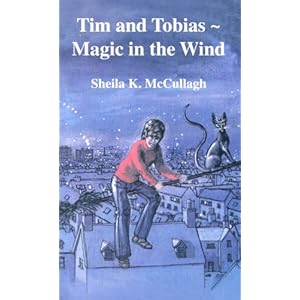
Tim and the Hidden People (series) by Sheila K. McCullagh

I discovered these at school when I was about 5 or 6. While everyone else was listening to the teacher reading about Roger Red Hat (another series by Sheila McCullagh) I’d sneak these off the shelves to catch up with the adventures of Tim, a boy who finds a hidden kingdom, and explores it with the help of a cat called Tobias. Often, I’d get so absorbed, I’d be completely unaware that the teacher had stopped reading and was giving me the Stare of Death™ until she came over and took the book out of my hands.

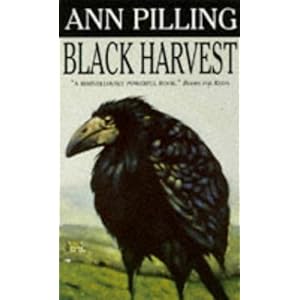
Black Harvest by Ann Pilling

By the time I got to middle school, I’d developed an appetite for ghost stories. One of my favourites was this dark and incredibly creepy book about Colin and Prill, who are dismayed when they find out their dorky cousin Oliver is coming with them on a much-anticipated holiday to Ireland. When they get there, though, Oliver turns out to be the least of their worries. Strange things start to happen – a terrible smell hangs in the air, Prill is haunted by nightmares and their baby sister falls ill. In the end it’s Oliver, the only one who seems unaffected, who discovers a connection to the Great Famine, and must fight to save them all. I remember this being the first book I ever read where, instead of seeing places I already knew in the real world, I saw places that were completely out of my own imagination, conjured up entirely by the words.


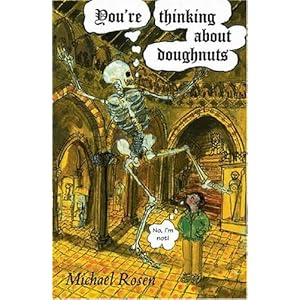
I also loved funny books, and there’s few authors funnier than Michael Rosen. This book is about Frank, who has to wait at the museum one night while his mum, who’s the cleaner there, finishes her shift. The exhibits, which include a talking doughnut-obsessed skeleton, come to life and together, they have all sorts of adventures. I got it through a book club at school and read it until it dropped to pieces.

In honour of the great man himself, I’m going to leave you with a video I discovered yesterday after a friend tweeted about it. The only word for it is… genius.

What about you? Which books made you fall in love with words and reading?

Tuesday, 13 December 2011

Those Were The Days…


I had a blog post all ready for today. A serious one, about serious things. Then I saw a tweet from someone about a website that sells 80s TV-themed clothing and accessories, and of course, having grown up in the 80s and 90s, I just had to go and check it out. I also read a post by the lovely Rebecca Brown on her blog My Little Notepad about her forthcoming Happiness Project, where she talks about the things that used to make her happy as a kid. And after that, I didn’t really feel like being serious any more.

Instead, in a fit of internet-induced nostalgia, I’ve decided to share with you my top five favourite TV programmes from when I was a kid. The programmes that used to cheer me up after a long, frustrating day at school, or on a dark winter’s evening. That inspired the games me and my sister used to play when we were young and even, without me really knowing it, helped set me on the path that led to me becoming a writer.

So without further ado, here they are…

The Moondial
This was originally a novel written by Helen Creswell, who then adapted it for a BBC TV series. It told the story of Minty, a girl sent to stay with her aunt after her mother is injured in a car accident. She discovers a moondial that allows her to travel back in time, and ends up trying to help two children from the past. Deliciously spooky and at times, downright terrifying!


Children’s Ward
Children’s Ward was written by Paul Abbot and Kay Mellor. It ran for (I think) 12 series, but the first is the one I remember most clearly. Gritty and fast-paced, it dealt with many difficult issues, and although I watched it long before I realised I wanted to be a writer, I used to make up new storylines in my head that were even more dramatic than the existing ones. Plus, in one episode, a character played by a young Tim Vincent called someone a dickhead. You’d never get away with that now…


Dogtanian
 I’m not even slightly ashamed to admit I own the entire box set of this. I was dog-mad as a kid (and still am), so this swashbuckling adventure, a cartoon adaptation of the Three Musketeers with canine and feline characters, was right up my street. It was jointly created by Spanish and Japanese animation studios and first broadcast in Japan, which meant the cartoon had a distinct anime flavour. And the theme tune was awesome (at least, until you got it stuck in your head…).


The Mysterious Cities of Gold
I was even more excited when I found the box set of this a couple of years ago. Another Japanese co-production, this time with a French studio, this was a truly epic series about a boy called Esteban who accompanies his father on a dangerous voyage to the New World in the 1500s to search for the lost Cities of Gold.


Knightmare
Hosted by the fabulously sinister Treguard of Dunshelm (Hugo Myatt), Knightmare was a fantasy-adventure game show where a team of kids guided one of their friends, known as a dungeoneer, through a virtual-reality dungeon that used CromaKey (bluescreen) technology. The dungeoneer would be ‘blinded from reality’ by a gigantic helmet that completely covered their eyes, meaning they had only the directions given by the others to help him or her overcome a series of puzzles and traps. They also had to pick up items of food to sustain their life-force, represented by an animation of a head, which would lose pieces as the force diminished. Hardly anyone ever completed their quest, so you were always wondering what sort of horrible end the dungeoneer would come to this time.


And then there's Thundercats… and Maid Marian and her Merry Men… and Count Duckula… and Trapdoor…

What TV did you love when you were a kid? Tell me in the comments below!

Wednesday, 9 November 2011

Finding Narnia

I'm multi-blogging today - you can also find me over the Lucky 13s, talking about the film that made me realise I wanted to be a writer, here.


Like millions of people the world over, I read C.S. Lewis’s THE LION, THE WITCH AND THE WARDROBE when I was a kid, and afterwards, dreamed of finding Narnia at the back of my own wardrobe, even though it was barely big enough to hold all my clothes, never mind the secret entrance to a whole other world.

It seemed I was doomed to disappointment. But if I’d only stopped to think about it, I’d’ve realised that portals to parallel worlds existed all around me, and that I’d already been through them many times.

Source
The first was a gigantic weeping beech tree which grew at the edge of the grounds of the environmental studies centre where I grew up. In winter, the branches which cascaded from its crown were bare skeletons, the ground beneath them muddy and wet, but in summer, it underwent a transformation. The branches became leafy umbrellas, with a circle of bare, dusty earth beneath each. For my sister and I, this was our ‘house’, with each branch-umbrella forming a separate room – and there were enough of them for a grand mansion. The leaves became walls, the trunk a spiral staircase (although we never tried to climb it), the ground richly-patterned carpets, and the sunlight filtering through the canopy around us the light from glittering chandeliers. We took tea, ordered the maids about (and each other), and generally had a splendid time. At least until we got called in for dinner.

My second Narnia was on the other side of the centre grounds where, just before they gave way to fields, there was a tiny wood of horse chestnut trees. They had grown up around an ice house which dated from the days when the centre was a private home, and the family who lived there needed somewhere to store ice to keep food cold. As well as being my very own conker supply depot, each summer the wood would be transformed into a lush green paradise as a carpet of cow parsley sprung up beneath the trees. I remember my mum helping my sister and I to cook dinner over a campfire there one year, listening to episodes of THE HOBBIT on the radio while we ate, and being surrounded by a frothing sea of scented white flowers. We each had a horse, too (two long branches that grew beside the domed roof of the ice-house, which we’d climb onto to reach them), and would travel many miles to distant and exotic lands.

Finally, next to a little pond in our garden, there was a small box hedge. It was hollow inside, so my sister and I claimed it as a den. There was just room in there to sit upright, using an old plank of wood as a bench, but in my mind it was vast, a giant’s cavern with a ceiling hung with stalagtites and glittering crystals studding the walls. Once, I found a ring in there – silver, with a small blue rabbit on it – that I’d lost several years before. I hadn’t lost it in there, though, so how it ended up there, I was never sure. Perhaps it really was a portal to another world – one where lost things wait to be found…

I left my Narnias behind eventually – like the way in to the real Narnia disappears for the older characters in the series, their doors quietly closed behind me while I was busy getting older – but being a writer means that even as an adult I get to live in other worlds all the time: the worlds I create on the page. Each new story I write is a doorway into another reality, and when the time comes to move on, it’s always a wrench.

But not for long, because there’s always another story forming somewhere. Another world waiting for me to notice it.

All I have to do is start writing…

Wednesday, 2 November 2011

How YA Saved My (Writing) Life


When I was a kid, I read every book in the children’s section of my local library I could get my hands on – Roald Dahl, Enid Blyton, Judy Blume, Nancy Drew, the Hardy Boys… I loved authors like Anne Pilling and Robert Swindells, too, I was a Point Horror junkie, and I devoured the Sweet Valley High books (well, they had a certain glamour!). I also read each and every one of the Chalet School books, lent to me by a relative. Basically, there wasn’t much I didn’t read. I loved it.

Then I hit my teens. Back then (and it wasn’t that long ago) YA didn’t really exist as a genre – at least, not in the sense it does now. And I don’t remember there being a designated section in our library for books for teens like we have in the library I work in today.

So I skipped straight from kid’s books to adult books – Stephen King, Ben Bova, Michael Crichton. About the same time, I started writing, and as a result, my early ‘novels’ (which I still have, stacked in the top of a wardrobe), have a distinctly hard-boiled flavour as I tried to imitate these authors, both in content and in style. I was thrilled, at fourteen, when my grandmother inadvertently paid me one of the biggest compliments anyone’s ever made about my writing – that I wrote like a forty-year-old man.

Then came the GCSE years, and reading for study, rather than pleasure. And as we analysed the meaning of Scout and Jem’s every word in To Kill a Mockingbird*, and dutifully wrote essays about Macbeth, I began to wonder whether, because, secretly, I still preferred Sci-fi to Shakespeare – despite being told that THIS was great literature! – I was lacking in some way.

So I turned my back on the books I liked to read in favour of the ones I thought I should be reading. Stopped writing the stories I wanted to write in favour of the sort I thought I was supposed to. And pretty quickly, I stopped having fun with them. Just stopped.

Often, I had to force myself to read. The few times I cracked and bought, say, the latest Stephen King, it was a guilty pleasure, one I’d only allow myself every now and then. One strange pattern did emerge, though – the ‘literary’ books I was making myself read nearly always had a young or teenage protagonist. But the significance of this didn’t occur to me then; I knew I felt more of a sense of kinship with these sorts of characters than any other, but I didn’t stop to think about why, or what that might mean for my own writing. In a desperate attempt to revive my fading enthusiasm, I had a go at a story for children, but because I didn’t read children’s books – I didn’t think I was allowed to, somehow (a crazy notion; I realise that now) – it failed, and ended up in the bin.

At the same time, I started to realise that I had no idea how to write a plot that actually worked. I’m not one of those lucky people born with an innate sense for storytelling – I simply couldn’t figure out why the plots in everything I wrote flatlined, or went in circles, or simply went nowhere at-all. Maybe it’s time to give up, a little voice in my head started telling me. Maybe you’re not a writer. Maybe it’s time to try something else.

Then two things happened. I saw a review of a book, STORY: SUBSTANCE, STRUCTURE, STYLE AND THE PRINCIPLES OF SCREENWRITING by Robert McKee, in a magazine. It sounded interesting – the article talked about it as if it could be applied to novel-writing, too – and the library had a copy in, so I borrowed it and found out it does exactly what it says on the tin. I’ll warn you, though, it’s not a book for the fainthearted. I had to read it through twice, taking detailed notes, before I even started to understand what it was trying to tell me. But then it started to click. I started to get it. And started to realise where I’d been going wrong.

At almost exactly the same time, I got the opportunity to go on a weekend course run by the award-winning YA & children’s author Linda Newbery. Better read one of her books, I thought (as shockingly, I never had). So I got myself a copy of THE SHELL HOUSE, which at the time was her latest novel, about two teenage boys separated by almost eight decades but linked by a crumbling mansion, and who are both struggling with issues of identity, faith and sexuality.

It was a revelation. I enjoyed it so much I read it in less than two days. And after the course, which was interesting and fun, I went back to the bookshop and the library for more YA books by other authors. I couldn’t get enough of them.

But still, my brain was slow to catch up. It wasn’t until several months later that something suddenly occurred to me: why not try writing the literary coming-of-age novel I’d been struggling with, on and off, for two years, as a young adult novel?

I remember that moment so clearly. It was an autumn evening, and I was sitting on the sofa in the little rented flat my then-boyfriend (now my husband) and I were living in at the time. I’d been working on another story all day which I was bored to death with. I hated the storyline. I hated the characters. I was constructing it according to McKee’s principles in STORY and it still didn’t work. But I was ploughing on relentlessly with it because I felt I ought to.

The moment the thought of writing YA exploded into my brain (it really was that dramatic) I put the boring story to one side, grabbed a notebook and started scribbling as ideas for this new novel literally tumbled into my head. Everything I’d learnt from STORY (which I’m still learning from – I don’t think I’ll ever stop) collided with the characters and story I’d been trying to piece together, and by that night I had an outline and a first chapter written out.

For the first time ever, I fell in love with my characters, becoming so obsessed with them I wouldn’t have been surprised to see them get on the bus when I was on my way to work. I found myself listening to music that sounded like the story. I was totally and utterly immersed in the world of the story – the first time it had ever happened. It was incredible.

That book was also the first one I ever sent out to agents and publishers, although – quite rightly, because it was terrible – it quickly collected a stack of rejections, and it would take several more novels before ACID was born. But from that moment on, I knew: I was going to write YA. I was going to read YA. And I was going to love it – every single minute of it.

What about you? How did you find your genre? Or are you still searching for it? Whatever stage you’re at, I’d love to hear about it in the comments!

*Ironically, I recently picked up my battered, much doodled-in copy of TKAM and it’s one of the best books I’ve ever read. Go figure!


Wednesday, 12 October 2011

Unearthing the Ichthyosaur

I grew up at an environmental studies centre, so in our house, being scared of spiders wasn’t an option. If I find one now, the only place I run to is the bookshelf to look it up in my battered Collins Insect Guide, handed down to me by my dad. I like snails. And snakes. And frogs. And I’ve loved going for walks in the countryside since I was old enough to well, walk.

But what I was most interested in when I was a kid (and still am today, actually) was fossils.

The centre is in an area known as the North Downs, a ridge of chalk hills which were formed when much of what is now Britain was covered by sea between 97 and 65 million years ago. In that chalk – itself formed out of the remains of microscopic plants and animals – are all sorts of fossils of the animals that used to live in that sea, some preserved in the chalk, some in flint. Which is why, one summer, I found several almost perfect sea urchin fossils sitting at the side of a footpath, where they’d washed out of the soil.


More often, I’d find a lump of chalk with something just visible inside it, which careful chipping away would reveal to be a shell or a belemnite. And sometimes, we’d visit a nearby quarry, long abandoned, where there were shark’s teeth preserved in the chalk. I can't tell you how many hours I spent hammering away at lumps of rock with a geological hammer, only to find… more chalk. Although my sea urchins were beautiful, they weren’t exactly rare. A shark’s tooth would have been, well, special. But it wasn't to be.

Then we went on a family holiday to the South-West. It was a freezing cold December day, and there we were on the beach in Lyme Regis, with horizontal rain and a sea the colour of roof slates. What on earth were we doing? Why weren’t we inside watching telly like sane, normal people?

The reason was that Lyme Regis, which sits on a band of Jurassic-era blue lias clay, even softer than chalk, is one of the best fossil spots in the UK. If you go in the summer, the beach has usually been picked clean, but in the winter storms lash the cliffs, and they slump, and the fossils inside are revealed.

Fossils like these:


These are four vertebrae from the tail of an Ichthyosaurus, a giant marine reptile that was around at the same time as the dinosaurs. And they were sitting on the sand in plain view. 


I never found any more of that Ichthyosaur, even though on subsequent visits, I combed the beach from end to end. But perhaps that’s what makes this fossil so precious – that it's such a unusual find.


And although I didn’t originally intend this post to be about writing at-all, as I put it together it I couldn’t help thinking how ideas can be like fossils. Sometimes, if you’re lucky – and it doesn’t happen often – you’ll just stumble across one, whole and almost perfect. Other times you have to chip away at it to remove all the extraneous stuff around it. If you’re lucky, you finally manage to get at it, but sometimes it comes out broken and mangled and you have hunt for something else.

But it’s thought of those rare, almost-wholly formed ideas that drives me forward with my writing, no matter how difficult or frustrating it gets at times. Who knows? There could be an entire Ichthyosaur buried in there… and I’ll never know unless I keep on looking. 


What keeps you going with your writing?


And in other news…

I’m excited to reveal that tomorrow a brand new blog, The Lucky 13s, is being launched – and I’m going to be part of it! I’ll post the link here and on Twitter tomorrow, so look out for it.