Oh dear. I haven't kept my promise to myself that I would try to start blogging more regularly again. To be fair, this is due to circumstances mostly outside of my control – on a personal level, 2015 has been a very difficult year for reasons I'm not going to go into here, and I'm going to be glad to see the back of it. This has meant blogging (and keeping up with the internet in general) has often been the last thing on my mind because I simply haven't had the energy to do it.
But lots of positive things have happened too, so as it's New Year's Eve, I thought I'd do a bit of a roundup. Here's what's been happening…
Writing Update
I've had several emails lately asking me if there's going to be sequels to ACID and The Fearless. I do have ideas for stories which follow on from them, so never say never, but at the moment, the answer is no. However, that doesn't mean I'm not writing! After parting company with my old agent last November, I spent this year working on a project I'm really excited about, and in October I signed with Ella Kahn at DKW Literary who loves the book as much as I do.
In other news, ACID made this list of the best ever YA sci fi books on the Huffington Post book blog, and The Fearless has been nominated for the 2016 Concorde Book Award - the winner will be announced in March, so watch this space!
10 Books read in 2015
I have read SO MANY amazing books this year and still have a TBR so huge it's on the brink of collapse. Here, in no particular order, are some of my favourites:
1. The Boy Who Drew the Future by Rhian Ivory
Two haunting parallel storylines, one set in the past, one in the present, about Noah and Blaize, who can both predict the future with their drawings. What happens when the boys' stories intertwine and tragedy threatens? Evocative and beautifully written, this is a book which stays with you for a long time.
2. Frail Human Heart by Zoe Marriott
The conclusion to the stunning The Name of the Blade trilogy. Mio has banished the monsters sent by the Goddess of Death, but to do so she had to make a terrible sacrifice. Can she save the human world or is the apocalypse inevitable? Packed with emotion, adventure, mythical creatures and gorgeous descriptions, this is one series I was very sad to be leaving behind.
3. The Wanderers by Kate Ormand
Flo has spent her life travelling with the circus. She – and all the other performers – are shape shifters, and use the circus as a way of hiding in plain sight in a world that mistrusts and misunderstands her kind. But can she keep hiding, or is her secret about to be revealed? A more-than-worthy successor to Kate's debut, Dark Days, this is a thrilling and romantic read.
4. When I Was Me by Hilary Freeman
Ella wakes up one morning to find she's not Ella any more. Well, she is – but a different Ella. She looks different, her friends are different, even her past is different. What's happened to her? Her quest for answers leads to a very surprising – and totally unpredictable – discovery. The ending really surprised me too – it's extremely clever. You won't be able to put it down!
5. Urban Legends by Helen Grant
Another final book in a trilogy I never wanted to end. Veerle is trying to live a normal life after the terrible events that have taken place recently. But a group of storytelling friends are disappearing one by one, and a killer is on the loose… Utterly gripping, I was reading this through my fingers! Easily the most terrifying instalment of the series, and it contains a plot twist that will have you screaming out loud at the page.
6. Name Upon Name by Sheena Wilkinson
On the Western Front, war is raging. But there is conflict going on closer to home as well. In Ireland, political tensions are reaching a head, tensions which threaten to tear fourteen-year-old Helen's family apart. Name Upon Name will make you cry, smile, and above all, think - I cannot recommend it highly enough.
7. Stonebird by Mike Revell
Liam's grandmother has dementia, and although Liam wants to make things better and keep his family from falling apart, he can't. Then he finds a gargoyle in an old church, and things begin to change… Stonebird is not only a sensitive look at the effects dementia can have on a family, but expertly weaves together many different plot threads and two different times to create a powerful and magical story which will appeal to readers of all ages.
8. The Secrets of Sam and Sam by Susie Day
This book features the Sams from the Pea books, and I thoroughly enjoyed getting to know the twins better. They both love being a twin, but who is Twin A, the best twin? And why does everyone seem to be keeping secrets – including the Sams themselves? A delightful look at family life and the complications of being a twin and trying to find your own identity.
9. An Island of Our Own by Sally Nicholls
Holly, Davy and Jonathan have been struggling since the death of their mother, and it's only Jonathan's hard work that's prevented them being taken into care. Then their wealthy, eccentric great aunt falls ill, and gives them some clues that send them on a real-life treasure hunt that might just solve all their problems… Another heartwarming look at family life, with an old-school style adventure at its heart. I loved it!
10. In Darkling Wood by Emma Carroll
Bundled off to stay with her grandmother while her brother gets a longed-for heart transplant, Alice feels left out and alone. The only thing she likes about staying with Nell is the wood at the bottom of the garden. But Nell, flying in the face of strong local opposition, is determined to cut the trees down. Can Alice change her mind? And who is Flo, the mysterious girl in the red coat who appears one day but doesn't go to her school, and who no one's ever heard of? I'm a big fan of Emma Carroll and really enjoyed this book, her first venture into contemporary fiction
10 Books I can't wait for in 2016 (Blurbs are from Amazon unless otherwise stated):
1. Cell 7 by Kerry Drewery (September, Hot Key)
From the Bookseller: Hot Key Books has acquired YA novel Cell 7 by Kerry Drewery, set in world where sinister reality TV has replaced the justice system. In the book, a teenager called Martha is accused of murdering Jackson Paige, a self-made millionaire. Like all the other criminals in the story, her fate will be decided on by the public, who will choose whether she lives or dies. Hot Key’s editor-at-large Emma Matthewson acquired the world rights in all languages in a three-book deal from Jane Willis at United Agents, and will publish in autumn 2016. “Cell 7 is a gripping story that imagines a fully realised world of today but with thought-provoking questions about the death penalty and the effect of modern media in our daily lives,” said Matthewson. “There is tension, action, romance and amongst all this Kerry retains the wonderful ability she has to prompt teens to ask questions about the world around them.”
2. Crush by Eve Ainsworth (March, Scholastic)
Anna's new boyfriend Will seems perfect in every way. But soon, a darker, controlling side to Will emerges. Can Anna escape before a dark secret, beyond even Will's control, threatens to crush them both? I've been lucky enough to get hold of a proof of this book, and it blew me away. Like Eve's debut, 7 Days, Crush is told from both the point of view of the abused and the abuser, giving a fascinating and sometimes heartbreaking insight into why people behave the way they do. This is a brilliant second novel – Eve Ainsworth is going from strength to strength with her writing, and I can't wait to see what she does next.
3. Boy X by Dan Smith (February, Chicken House)
Kidnapped and drugged, Ash wakes up on a remote tropical island. His mum - a genetic scientist - has been imprisoned and infected with a deadly virus. Where is he, and what's he doing there? He sets out to cross the jungle to find out and rescue his mother. Soon he realises he's quicker and sharper than before. But there's something else ...why are the animals watching him, and how can he use the jungle to his advantage?
4. Lifers by Martin Griffin (April, Chicken House)
Fear haunts the streets of Manchester: a schoolgirl has disappeared. Preston is drawn to investigate, exploring the city in the hunt for his missing friend. Deep in the bowels of a secret scientific institute, he discovers a sinister machine. Captured and condemned to a cavernous space filled with problematic teens, Preston is determined to escape - but this is no ordinary jail. Friendships are forged and lives lost in a reckless battle for freedom, revenge - and revolution.
5. Ride by Lisa Glass (June, Quercus)
Seventeen-year-old Iris has returned to her hometown of Newquay. Leaving behind her promising surfing career. Leaving behind Zeke, the boy who changed her world. She's happy to get back to her old life, her friends and family. She wants to rediscover her passion for surfing. But Iris soon realises it won't be that simple. Because while summer romances might only last the season, first loves never truly leave you.
6. Cuckoo by Keren David (August, Atom)
Jake is an actor - a teenager who had a regular role in one of the UK's best-loved soaps until his character, Little Riley, went upstairs to his bedroom and never came down again . . . Jake clings to the hope that the writers will bring his character back (they didn't kill him off after all); but as time passes, and finances dwindle, reality starts to dawn. His family situation is hard. His dad has anger issues that have led to his recent redundancy, his mum cares full-time for his severely autistic older brother, and now they're struggling to pay the rent. Suddenly, Jake feels his acting career is crucial for their financial security and well-being. The pressure mounts for him to succeed - and home doesn't feel like home any more: it feels like a powder-keg waiting to explode. Cuckoo is a novel about the roles we play when we don't fit in anywhere, and finding unlikely solace when home is the least welcoming place of all.
7. Barefoot in the Wind by Zoe Marriott (July, Walker Books)
A retelling of Beauty and the Beast set in fairytale Japan. I don't have many details for this yet, but I know it's going to be awesome!
8. The Deviants by C.J. Skuse (September, Mira Ink)
Described as the Famous Five meets We Were Liars… I can't wait!
9. The Many Worlds of Albie Bright by Christopher Edge (January, Nosy Crow)
When Albie's mum dies, it's natural he should wonder where she's gone. His parents are both scientists and they usually have all the answers. Dad mutters something about Albie's mum being alive and with them in a parallel universe. So Albie finds a box, his mum's computer and a rotting banana, and sends himself through time and space to find her...Quality commercial fiction, well written with real heart and adventure.
10. Electrigirl by Jo Cotterill (February, Oxford University Press)
Holly Sparkes is just your average 12-year-old, that is, until she's hit by a bolt of lightning. Now Holly is EXTRAordinary. Like a human battery Holly can generate a massive amount of electricity in seconds, which could come in handy if she's ever going to solve the mystery of her best friend's disappearance. Because when you're dealing with the likes of Professor McAvity and her mysterious CyberSky corporation, you need all the help you can get! This exciting story includes black and white graphic novel style illustrations by Cathy Brett.
There's also going to be a new book by Rhian Ivory called Matchgirl, a contemporary retelling of Hans Christian Andersen's The Little Match Girl which I'm very excited about, and I can't WAIT for Justin Cronin's City of Mirrors either… but I'd better stop here or I'll be going on about books all day!
UKYA and UKMG Extravaganzas
In February 2015, Kerry Drewery and I organised the first ever UKYA Extravaganza at Birmingham High Street Waterstones. It was such a success that we decided to do it again in Nottingham this October – and have a MG (Middle Grade) Extravaganza as well! With the help of the fab Paula Rawsthorne (our MC) and Jo Cotterill (who helped gather all the MG authors), the events featured over 60 authors between them over two weekends. You can see photos and read all about them over on the UKYA Extravaganza Facebook Page. And we're doing it again! In 2016, the UKYAX and UKMGX will be held in Newcastle. Details to follow soon!
School Visits and Workshops
I've done lots of school visits this year, including my first ever visit to a primary school, working with Year 5 at Hatfield Primary in Sheffield to produce writing about jungles. It was a lot of fun! I did another module with Ellis Guilford School in Nottingham about writing thrillers, which included a visit to Bletchley Park, an incredible place. More recently, I attended the East Midlands heat of the Kid Lit Quiz at Lady Manners School in Bakewell, and I'm looking forward to several upcoming workshops and visits in the new year.
I also branched out with my workshops this year and started working with my husband, Duncan, who is an artist. We did some Making an Artist's Book workshops for the Derbyshire Literature Festival at Alfreton and Chesterfield library, helping people create a piece of writing, then illustrate it with simple printmaking techniques. You can find out more about these workshops here.
In May, I accompanied 25 students from my Patron of Reading school, Titus Salt School in Yorkshire, on a residential weekend to Malham, where we made films based on stories created on a visit earlier in the year. You can read all about it and see photos here, and catch up with all my Patron of Reading activities on my Patron of Reading page on this blog.
I've also been asked to return to Titus Salt as their Patron of Reading for a second year – hooray! My first visit for the 2015-16 school year was in November, where I worked with students on journal-writing, retelling the Alice in Wonderland story and even making up a story about a gorilla farm on Mars! You can see my latest Patron of Reading Newsletter here, which includes the story and a recommended reading list for students in Year 7.
So, that's been my 2015. I have no idea what 2016 will bring, writing-wise, but I hope I'll have some good news to share at some point. In the meantime, a very happy New Year to all my blog readers, and I'll catch up with you again soon!
Showing posts with label writing. Show all posts
Thursday, 31 December 2015
Monday, 16 September 2013
Project UKYA
You may already know awesome UK book blogger Lucy Powrie from her blog Queen of Contemporary, or from her brilliant #UKYA Twitter chats. Lucy is a champion of all things UK YA, and now she has set up a new blog, Project UKYA, to help spread the word about all the amazing YA authors in the UK and their fantastic books. I'm very excited about this project and I can't wait to see what Lucy has in store for us. Click on the badge below to check it out!
Labels:
Blogging,
Books,
Lucy Powrie,
Project UKYA,
writing
Monday, 29 July 2013
Before and After
I thought it was time to do a post about what life's like now I'm a published author. Getting here has been a very surreal and exciting journey, with lots of waiting, bursts of panic and moments of total awesomeness.
So what's changed? Well, I have a book published, and another coming out next year. This has been a dream of mine since I was 13 years old, and to say it's been a life-altering experience is an understatement. Whatever happens in the future – and I hope that involves getting more books published, but you can never take anything for granted in this business – there is a book out there with my name on it. Yes, I'm still pinching myself.
Even more thrilling is when readers get in touch to tell you they've enjoyed your book. My favourite email so far has to be from a lady who told me that thanks to ACID, she's started reading again after a very long break. To think that the words I wrote on my sofa, on my dented laptop, can do that for someone… wow.
I've also been doing lots of school visits and events. Writing can be a lonely business, and it's so much fun to get out and meet readers and other authors – I love it!
What hasn't changed, however, is that I still don't feel like I know what I'm doing. At all.
I used to think that if I got published, something would go ping inside my head and all the struggles I encountered when trying to write my novels would magically disappear. I'd feel confident about my plots. I'd be able to work out my characters' motivations first time round. I wouldn't get stuck halfway through and have to go back and work out where it had all gone wrong. And I most definitely wouldn't have many, many days where I felt like the Worst Writer Ever™ and doubted my ability to finish a single sentence.
Er… no. Ironically, since ACID sold, I've doubted myself more, not less. This has partly been the dreaded second novel syndrome (yes, it exists) - writing to a deadline for the first time EVER, worrying whether my publisher will like it, worrying whether readers will like it… you get the idea.
Part of it also comes from being more aware of the writing process. Now, when something in my stories isn't working, I know straight away. I can no longer kid myself that it'll be OK, and carry on in a haze of blissful ignorance. These days, writing is a stop-start-stop-start process for me; very rarely do I sit down and start typing, and the words just flow.
But I've found ways of coping, mostly by reminding myself that I've done this before, and I can do it again. There's always a way through, even if finding it involves a lot of rewriting, hair-pulling andwine coffee drinking.
And nothing beats the excitement of opening up a blank word document and typing the first line of a story that's been keeping you awake at night – it's worth all the stress that inevitably follows, just for that!
Having a support network has helped, too. Getting to know other writers via Twitter and Facebook has led to me being involved with two group blogs, The Lucky 13s and Author Allsorts. Once upon a time, I kept my writing a secret and didn't know any other writers at all. Now, I know many other people who understand the highs and lows of the writing process, which makes those difficult times less scary.
To finish, here are two of those moments of total awesomeness…
No. 1: ACID has been nominated for the 2014 Coventry Inspiration Book Award, 'Just the Book' (14+) category. I don't know who else is on the shortlist yet, and the winner isn't announced until February, but as soon as I have more details, I'll let you know. Here's the 2013 shortlist - I think you'll agree that whoever's on it this time round, I'm going to be in some very distinguished company!
No. 2: last week, ACID was Number 3 in the Waterstones Children's Sci-Fi Bestsellers list, two books below Rick Yancey's THE FIFTH WAVE. Waah! A huge thank you to everyone who's bought, read and helped spread the word about ACID - it wouldn't have got there without you!
Before you go, check out today's post over at Author Allsorts, where I and some other members of the group are sharing our favourite pieces of advice for budding authors and illustrators.
So what's changed? Well, I have a book published, and another coming out next year. This has been a dream of mine since I was 13 years old, and to say it's been a life-altering experience is an understatement. Whatever happens in the future – and I hope that involves getting more books published, but you can never take anything for granted in this business – there is a book out there with my name on it. Yes, I'm still pinching myself.
Even more thrilling is when readers get in touch to tell you they've enjoyed your book. My favourite email so far has to be from a lady who told me that thanks to ACID, she's started reading again after a very long break. To think that the words I wrote on my sofa, on my dented laptop, can do that for someone… wow.
I've also been doing lots of school visits and events. Writing can be a lonely business, and it's so much fun to get out and meet readers and other authors – I love it!
What hasn't changed, however, is that I still don't feel like I know what I'm doing. At all.
I used to think that if I got published, something would go ping inside my head and all the struggles I encountered when trying to write my novels would magically disappear. I'd feel confident about my plots. I'd be able to work out my characters' motivations first time round. I wouldn't get stuck halfway through and have to go back and work out where it had all gone wrong. And I most definitely wouldn't have many, many days where I felt like the Worst Writer Ever™ and doubted my ability to finish a single sentence.
Er… no. Ironically, since ACID sold, I've doubted myself more, not less. This has partly been the dreaded second novel syndrome (yes, it exists) - writing to a deadline for the first time EVER, worrying whether my publisher will like it, worrying whether readers will like it… you get the idea.
Part of it also comes from being more aware of the writing process. Now, when something in my stories isn't working, I know straight away. I can no longer kid myself that it'll be OK, and carry on in a haze of blissful ignorance. These days, writing is a stop-start-stop-start process for me; very rarely do I sit down and start typing, and the words just flow.
But I've found ways of coping, mostly by reminding myself that I've done this before, and I can do it again. There's always a way through, even if finding it involves a lot of rewriting, hair-pulling and
And nothing beats the excitement of opening up a blank word document and typing the first line of a story that's been keeping you awake at night – it's worth all the stress that inevitably follows, just for that!
Having a support network has helped, too. Getting to know other writers via Twitter and Facebook has led to me being involved with two group blogs, The Lucky 13s and Author Allsorts. Once upon a time, I kept my writing a secret and didn't know any other writers at all. Now, I know many other people who understand the highs and lows of the writing process, which makes those difficult times less scary.
To finish, here are two of those moments of total awesomeness…
No. 1: ACID has been nominated for the 2014 Coventry Inspiration Book Award, 'Just the Book' (14+) category. I don't know who else is on the shortlist yet, and the winner isn't announced until February, but as soon as I have more details, I'll let you know. Here's the 2013 shortlist - I think you'll agree that whoever's on it this time round, I'm going to be in some very distinguished company!
No. 2: last week, ACID was Number 3 in the Waterstones Children's Sci-Fi Bestsellers list, two books below Rick Yancey's THE FIFTH WAVE. Waah! A huge thank you to everyone who's bought, read and helped spread the word about ACID - it wouldn't have got there without you!
![]() |
| Thank you!! |
Before you go, check out today's post over at Author Allsorts, where I and some other members of the group are sharing our favourite pieces of advice for budding authors and illustrators.
See you next time!
Labels:
ACID,
awards,
getting published,
Waterstones,
writing
Sunday, 30 June 2013
Happy Book Birthday to Joanne Hall and THE ART OF FORGETTING: RIDER!
Today is the official publication day for Joanne Hall's THE ART OF FORGETTING: RIDER (book 1 of The Art of Forgetting sequence). Joanne is a fellow hound minion, the driving force behind the awesome BristolCon, and an all-round nice person, and when she asked if I'd like to read an early copy of the novel, I jumped at the chance – and loved it! Compelling and beautifully written, it's not a book I'll be forgetting any time soon. So to help celebrate her book birthday, I asked Joanne to pop over to the blog and answer a few questions. Take it away, Joanne!
When did you first
realise you wanted to be a writer?
I always wrote little stories right from when I could first
write, and I used to fold them into “books” – I think my granny still has a
book I wrote about a lion when I was about five. Then when I was about six or
seven I discovered that writing books was a proper job that people did, and I
ditched my initial plan to become a Jedi and decided I would write books
instead.
What drew you to writing fantasy/SF?
When I was growing up, the house was always full of books of
all kinds. My dad would take me to the cinema to watch fantasy films, and I was
lucky enough to grow up in the 1980’s, which was a great period for family
friendly fantasy and SF films. My mum and her brother are both SF and Fantasy
fans, and they let me raid their bookshelves as much as I liked. It was my
Uncle Rob, when I was moaning that I’d read all the good books in the school
library and I was bored with reading about kids like me, who lent me The Belgariad
(I think I was about ten). About the same time a girl I was friends with at
school lent me Anne McCaffrey’s Dragonflight
– those are the books that are chiefly responsible for making me the nerd I am
today. I read everything in the genre that I could get my hands on, which
wasn’t much as we lived in a tiny village with no bookshop, and it was a long
trip into town to go to Smiths or Waterstones, but my mum was a passionate
library-goer, and it was through the library that I discovered David Gemmell, Terry
Pratchett, Marion Zimmer Bradley... It seemed natural that the stories I wrote
were fantasy, because that was what I loved to read.
Who inspires you?
Who inspires you?
I suck up inspiration from all over the place, like a blobby
old sponge. It can be anything – there was a story on the news last night about
a man who goes fishing every morning in the Fukushima fall-out zone, even
though the fish are radioactive and he has to put them back, because that’s
where he used to fish and now it’s the only thing in his life that’s normal.
That kicked off all sorts of story ideas. As for people; my friends who are
also writers inspire me and push me on to do better. Inspiration – it’s kind of
a hard thing to quantify....
What is the best and worst advice you've been given about writing?
“Write what you know” is terrible advice, and it’s one I
hear a lot. If everyone just stuck to writing what they knew, where would
speculative fiction be? Far better to write what you love, what you’re
interested in, what you feel passionate about. And if you don’t know about what
you’re writing about, get out there and learn about it!
The best advice always seems to come from my friend Gareth L
Powell, who posts regular advice columns on his blog, but most of my
favourites, and the advice I turn back to over and over again, are the ones
about getting the ruddy thing finished. All first drafts suck; you can’t edit a
blank page; get it written, then get it right. I find myself repeating these on
a regular basis!
Can you tell us about your journey to becoming published author?
I wrote a book (Hierath),
I sent it out to everywhere I could think of, I amassed a lovely collection
of “Thanks-but-no-thanks” letters, and while I was doing that I wrote another
book. By the time the second book was finished, I had an acceptance for a
trilogy from Epress Online, a small press publisher based in Florida, so I
wrote the third book. Publishing takes a really
long time, so while I was editing the books that they had accepted, I
started work on another book.
Sadly, the two woman who ran Epress, Joan McNulty Pulver and
Margaret Carr, died within a few months of each other, and the company folded
and the rights where returned to me. So I had three books out but no publisher,
one finished manuscript (The Art of
Forgetting) and another one that was halfway through. So I started looking
for a publisher all over again, and I can tell you it’s no easier second time
around. I found my current publishers, Kristell Ink, on Twitter. They’re a new
publisher based in Oxford, and I was keen to go with them because they had no
upper word limit (Art of Forgetting
is loooong….). It didn’t take long for them to get back to me, and they said
they loved it, only… “it’s a bit long….” Which is why it’s coming out in two
volumes!
What is your dream writing day like?
Get up, have a cup of tea, walk the dog in the sunshine,
write 1500 words of scintillating brilliance before a lunch of coffee and
calorie-free cake with a good friend, write another 1500 words of scintillating
brilliance, walk the dog, come back to find tea cooked for me by my boyfriend,
curl up with a movie or a good book (This Never Happens)
And what's your actual writing day like?
Fall out of bed, groan at my hair, drag the dog around in
the rain, stare at a keyboard until my eyeballs bleed, fart around on Twitter,
type a bit, delete it, do some admin, fart around on Twitter some more… I try and write 1000 words a day between
bouts of hideous procrastination and furious admin-ing, and I usually get most
of them done before lunch, because I’m more awake in the mornings. But I’m the
world’s most easily distracted person, so it doesn’t always work out like that!
What's your favourite...
Film?
What's your favourite...
Film?
Star Wars : A New Hope. PROPER Star Wars, watched at an
impressionable age. I’ve seen it a million times, but if I turn on the TV and
it’s on I’ll still drop whatever I’m doing and watch it. Other favourites are
Labyrinth, Terminator, Dogma and The Princess Bride.
Song/piece of music?
“Motorcycle Emptiness” by Manic Street Preachers. The Manics
are my all-time favourite band, I’ve seen them live dozens of times. I worked
in record shops for years, and I’m into all kinds of music.
Book?
Book?
“The Lord of The Rings” – I don’t read it that often, but
when I go back to it I’m reminded why I love it – it’s the perfect fantasy
novel.
Links www.hierath.co.uk – my blog
www.kristell-ink.com
– publishers
@hierath77 – Twitter
About Joanne
Joanne Hall is the same age as Star Wars, which explains a lot…. She lives in Bristol, England with her partner. She enjoys reading, writing, listening to music, playing console games, watching movies, eating chocolate and failing to exercise.
A full-time author since 2003, Joanne’s “New Kingdom” fantasy trilogy was published by Epress Online, and was a finalist in both the PLUTO and EPPIE awards . Her short stories have appeared in many publications, both print and online, including Afterburn SF, Quantum Muse, and The Harrow.
She has had short stories published in several anthologies, including “Pirates of the Cumberland Basin” in Future Bristol, and “Corpse Flight” in Dark Spires. Her short story collection, “The Feline Queen” was published in March 2011 by Wolfsinger Publications, and her fourth novel, “The Art of Forgetting”, has been accepted for publication by Kristell Ink and will be released towards the end of 2013.
For the last four years, Joanne has been the Chair of BristolCon, Bristol’s premier (and only!) science fiction and fantasy convention She also runs the Bristol Fantasy and SF Society Facebook group, and occasionally works in an editing position for Dark Ocean Studios, a small comics company based in San Jose, as well as taking on freelance editing projects.
She is the co-editor, with Roz Clarke and Rick Novy, of “Colinthology”, a tribute anthology to the late Colin Harvey, which also includes her short story “Lukewarm in Lynhelm.” “Colinthology” was published as an ebook in October 2012 by Wizards Tower, and launched at BristolCon.
She sometimes answers to “BristolCon” and talks about herself in the third person on the internet. She is always happy to hear from readers, either via the “Talk to Me” form or via Twitter ( @hierath77 ).
A young boy leaves his village to become a cavalryman with the famous King’s Third regiment; in doing so he discovers both his past and his destiny.
This, the first
part of The Art of Forgetting, is a
gripping story about belonging and identity, set in a superbly imagined and
complex world that is both harsh and beautiful.
What others are saying about THE ART OF FORGETTING: RIDER
‘A roistering romp, with darker undercurrents... Intriguing characters in a setting both familiar and different'
Francis Knight, author of ‘Fade to Black’, Orbit publishing
‘...another excellent addition to Joanne Hall’s rapidly growing
collection of published works.’
Robert
Harkess, author of ‘Aphrodite’s Dawn’, Salt Publishing.
‘With characters
real enough to touch and a storyline that tugs on the heartstrings . . . a tale
that will linger long after the pages close.’
Monday, 22 April 2013
Writing Groups - In Their Diversity and Wonderfulness!
The other night, I and a Twitter friend, Jo Carroll, were talking about writing groups, and came up with the idea of doing a dual blog post about the groups we're involved with. First, here's Jo:
This post has grown out of a twitter-chat: we were
wittering about our groups and it was clear that we both value them, but they
are organised differently.
Which got me wondering whether it's the structure
of a group that matters, or the fact that it is an opportunity to work
collectively with people we trust.
I go to a group that used to call itself a Life
Writing Group. It is organised by a woman who also teaches with the OU; she
brings and exercise or two, gives us homework, and generally keeps us in order.
A year or so ago we spent a lot of time talking about memory and how to reframe
that into something literate. We laughed (and wept a little) and wrote some
wonderful pieces.
We've grown, over the year. While the structure of
the group is the same, and some of us are still working almost entirely on
memoir, others have branched out into fiction - both short stories and novels -
and others into poetry. We've been submitting work all over the place, and even
the sniff of success is celebrated with cake.
It is the writing highlight of my week (yes, every
week, during term time.)
I, meanwhile, have a very different experience. As well
as being an author, I have a day job in a library, where I’ve been supporting
and coordinating an adult writing group for around 3 years now. The group
started out as a wellbeing group, run by another writer, and I took it over
when her sessions finished.
We meet
monthly, and there is a wide range of ages and interests. So often, people don’t
have a space in their lives where they can be creative, so this group aims to
give them that. Our main focus is on having fun and trying out new things. The
sessions usually consist of short exercises which members can interpret however
they want, but there is no pressure to take part if a particular exercise
doesn’t inspire, and you don’t have to share your work if you don’t want to.
Alongside
the adult group, I run a group for 9-14 year-olds which has been going for
around a year now. It follows basically the same format as the adult group, and
it’s amazing how well many of the exercises we do suit both groups! And of
course, we always have chocolate – it’s essential writing fuel!
What about you? Are you in a writing group? How does it work, and what do you do? Tell us in the comments below!
Labels:
Jo Carroll,
writing,
writing groups
Monday, 11 March 2013
G-Dog Blogs: What It's REALLY Like When Your Human Is A Writer
Welcome to a brand new feature on the blog – G-Dog Blogs! I've decided to risk letting my houndy writing assistant take over on here from time to time, to tell you all about life from his point of view. Oh, and he'd love it if you left him a comment. Comments are like virtual biscuits. Over to you, G-Dog…
G-Dog. Psst. Wake up! *prods*
Hmm? Wha…? *Stretches and yawns* Hi, blog readers! Yep, my human has left me in charge of the blog. It's mine – allllllll mine… *Rubs paws together*
Oi, G-Dog, I'm watching you!
Ahem. Where was I? Oh yes. I thought I'd start with a post about what it's REALLY like when your human is a writer. With pictures.
![]() | |||
| There's a lot of waiting around. |
![]() |
| A LOT. |
![]() | |
| 'I'll just finish this chapter,' she'll say. 'I've just got to email my editor.' BO-ring. And when we DO finally go for a walk… |
![]() |
| …she's STILL thinking about her work. Humph! Hello? Hello? I'm down here! |
![]() | |
| It's not all bad, though. At least there's always someone around to tell me how cute I am. |
![]() |
| We always have lots of fun. |
![]() |
| And if I do this face, I get biscuits. Yeah, life when your human is a writer isn't half bad, actually… |
Labels:
G-Dog Blogs,
writing
Wednesday, 6 March 2013
Guest Post by PRETTY GIRL THIRTEEN Author Liz Coley: How Writing is Like Learning the Game of Tennis
Today,
I'm welcoming Liz Coley to the blog. Liz is a fellow Lucky 13 and author of YA
mystery/thriller PRETTY GIRL THIRTEEN, which came out from Harper on 28th Feb
in the UK, and will be published in the US by Katherine Tegen Books on 19th
March under the title PRETTY GIRL-13. This is what it says on Amazon:
Angie
Chapman is only 13 when she gets lost in the woods in the middle of the night.
The
next thing she knows she’s returned home, scars around her wrists and ankles,
physically exhausted. Her parents collapse into tears when they see her, but
Angie doesn’t understand – until they tell her she has been missing, presumed
dead, for three years.
Angie
doesn’t remember anything from her missing years. But there are people who do –
people who could tell Angie every terrifying detail, if only they weren’t
locked inside her mind.
With
help, Angie begins to unravel the darkest secrets of her own past.
But
does she really want to know the truth?
Doesn't
it sound amazing?! So without further ado, here's Liz with a guest post about
how writing is like learning the game of tennis.
![]() |
| Photo © Liz Coley |
My author bio claims that I play tennis to
stay fit and humble. So far this indoor tennis season, my record is 4 wins and
4 losses. That’s the humbling part. And I can tell I’m getting more fit,
because everything hurts.
Here’s what I know about learning to play
tennis:
(1) You can learn the theory of the game by
watching the best players, but you don’t improve your own game from the stands;
the champs possess skills you can only dream of at this point.
(2) You can’t learn tennis all by yourself.
You need to find a group of people--some may be more advanced and some may be
less--who want to play with you. By putting your feet on the court, through
trial and error together, you’ll make gradual improvements in coordination and
stamina. Scores won’t matter—it’s all about the camaraderie, the coffee, and
the lunches out.
(3) At some point, you’ll decide to make a
greater investment in developing your skills and pay for lessons. One lesson,
you’ll focus on ground strokes, another week on net play, another time on
defensive lobs. A professional coach knows how to break the game down into
component parts and direct your focus to improving the level of your play bit
by bit.
(4) Finally, you will realize it’s time to
put yourself out there where it really counts, face to face with competition.
Skills matter. Scores matter. And even if you have a disappointing or even
embarrassing match one week, you have to pull yourself up by your shoelaces and
try again. You’ve made the commitment to play.
(5) Lather, rinse, repeat. It’s a seemingly
endless path upwards. Even the champions of the world have coaches. They
practice constantly. And they always seek to improve strength, skills, and
strategy.
Here’s the parallel in learning to play the
game of authorship:
Observation: Read widely to pick up the nuances of language—grammar,
vocabulary, and voice. By studying pace and conflict and turning points, figure
out how plotting works. Read sometimes for pure pleasure, sometimes with a
story-engineer’s eye. Good writers are good readers.
Participation: Develop a network of writing friends and critique partners. Some
will be your mentors; some will be your mentees; some will be your exact equals
in their progress down the road of craft development, representation, and
publication. Whether you are helping or being helped, you are learning the
craft and business together. Don’t forget the coffee and mutual support and
treating to lunch. Writing does not have to be a solitary endeavor.
Education: Attend conferences and workshops as an investment of your time,
talent, and treasure. Workshops tackle specific components of the craft and
business of writing, allowing you to focus on improving one particular part of
the package that is you. Becoming a professional requires mingling with others
in your field, making connections, and learning not only from books on the
craft, but from the best in person. If you aren’t confident enough to invest in
yourself, who will be? Conferences and workshops are the one place where you
have immediate access to the gatekeepers to traditional publishing—the agents
and editors.
Competition: Tennis is more forgiving than publishing in that the competition
is stratified: beginners compete against beginners, intermediates against
intermediates, and grand slam champs against each other. Writers compete
against the entire market for acceptance, although publishing houses range from
the petite to the megalithic. One way or another, your work has to march onto
the court and present itself, compete for the attention first of an agent, then
a publisher, then the reading public. Don’t let the fear of losing prevent you
from playing.
Completion: There is none. Throughout your life, you will evolve and improve
as a writer.
You can check out Liz's website and blog here, connect with her on Twitter here and like her author page on Facebook here. Thank you for such a great guest post, Liz!
Labels:
Liz Coley,
Pretty Girl Thirteen,
Pretty Girl-13,
Tennis,
writing
Monday, 5 November 2012
The Five Stages of Writing a Novel (According to The Hound)
Inspiration
![]() |
| I have an idea! |
Euphoria
| OMG THIS IS THE BEST IDEA EVER I'M GOING TO CHEW ON MY SQUEAKY ALIEN FOR A WHILE BECAUSE I'M SO EXCITED!!! |
Realisation
![]() |
| Wait… I have to actually write this thing, don't I? |
Despair
![]() |
| UGGHHH. I AM THE WORST WRITER EVER. NO-ONE IS EVER GOING TO WANT TO READ THIS THING. |
Triumph
![]() |
| I did it! I DID IT! …Whaddya mean, I have to write a second draft?? |
Wednesday, 10 October 2012
Writing YA Is Not A Rehearsal
Recently, I was asked a question. The question. The one that most, if not all people who write for children and young adults gets asked at some point:
"When are you going to start writing for grownups?"
I wasn't in a situation where I could say what immediately came into my head, so all I could do was look at them like this:
But later – much later, long after this person had gone, because that is what ALWAYS happens to me – I thought of a proper (and polite) answer.
This is it.
I came to writing YA after trying everything else, including writing for adults (which nearly made me give up on writing altogether – you can read more about that here). But I didn't start writing it because it was a last resort, or because it's easy. I didn't start writing it because I wanted to hop on a bandwagon or because it was 'something to do' while I was striving towards writing 'proper' books for adults. And I don't know any other children's or YA authors – and that includes authors who write for young people AND adults – who started writing it for that reason either.
Y'see, it's not only the author you insult with a question like that. It's their readers, too. To dismiss books for young people as somehow being inferior to those for adults is to dismiss the young people themselves – as if, somehow, they and the books they read have less worth.
You only have to read a handful of the many amazing children's and YA books that are out there right now to realise what a crazy attitude this is. As categories, they contain some of the most challenging, frightening, beautiful, downright exciting books I've ever read. Philip Pullman, anyone? Roald Dahl? Melvin Burgess? Malorie Blackman? Tabitha Suzuma? I could go on… and on…
Which isn't to say I don't enjoy books written for adults, because I do. In my mind, there's no distinction – and there wasn't when I was younger. If a book is well-written, has a gripping storyline, relatable characters, I'll devour it no matter what age group it's aimed at; I've been the same all my life. Which is why, when people start pitching one category against another, looking down their noses at literature for younger readers, it drives me crazy.
I may write for adults one day, or I may not. Why should it even matter? Kids are not just adults-in-training. Their books are not dumbed-down versions of the books their parents and the other adults around them read. And the writers who write for them aren't just doing it as a rehearsal. We write what we write because we can't not write it – because it's in our DNA.
And we're having a great time doing it, thank you very much.
"When are you going to start writing for grownups?"
I wasn't in a situation where I could say what immediately came into my head, so all I could do was look at them like this:
| Errr, WHAT did you just say? (Image licensed for use under Creative Commons) |
But later – much later, long after this person had gone, because that is what ALWAYS happens to me – I thought of a proper (and polite) answer.
This is it.
I came to writing YA after trying everything else, including writing for adults (which nearly made me give up on writing altogether – you can read more about that here). But I didn't start writing it because it was a last resort, or because it's easy. I didn't start writing it because I wanted to hop on a bandwagon or because it was 'something to do' while I was striving towards writing 'proper' books for adults. And I don't know any other children's or YA authors – and that includes authors who write for young people AND adults – who started writing it for that reason either.
Y'see, it's not only the author you insult with a question like that. It's their readers, too. To dismiss books for young people as somehow being inferior to those for adults is to dismiss the young people themselves – as if, somehow, they and the books they read have less worth.
You only have to read a handful of the many amazing children's and YA books that are out there right now to realise what a crazy attitude this is. As categories, they contain some of the most challenging, frightening, beautiful, downright exciting books I've ever read. Philip Pullman, anyone? Roald Dahl? Melvin Burgess? Malorie Blackman? Tabitha Suzuma? I could go on… and on…
Which isn't to say I don't enjoy books written for adults, because I do. In my mind, there's no distinction – and there wasn't when I was younger. If a book is well-written, has a gripping storyline, relatable characters, I'll devour it no matter what age group it's aimed at; I've been the same all my life. Which is why, when people start pitching one category against another, looking down their noses at literature for younger readers, it drives me crazy.
I may write for adults one day, or I may not. Why should it even matter? Kids are not just adults-in-training. Their books are not dumbed-down versions of the books their parents and the other adults around them read. And the writers who write for them aren't just doing it as a rehearsal. We write what we write because we can't not write it – because it's in our DNA.
And we're having a great time doing it, thank you very much.
Labels:
rant,
writing,
Young Adult
Thursday, 23 August 2012
Lots of Links!
I'm missioning on with the WIP, which is now at over 78K and moving into the last third of the story. It's over 4 years since I last wrote a first draft and I'd forgotten what it feels like to reach that point where this collection of words, paragraphs and chapters begins, at last, to feel like an actual book. A ragged-round-the-edges, riddled-with-plot-holes-so-big-you-could-lose-a-bus-in-them, going-to-need-a-ton-of-work sorta book, but a book nonetheless. It's so exciting!
As a result of all this writing, my brain has turned to roughly the consistency of porridge and all I could do when I remembered I had a blog post to write was stare blankly at the screen and drool slightly. OK, maybe I didn't drool, but you get the idea. So this week, I'm doing a links round-up.
First up, I have a board on Pinterest where I'm adding the covers for my fellow Lucky 13s debut novels as they're revealed. There are some amazing covers - I can't wait to read the books inside them! You can see them here.
I have a Pinterest board for my WIP. They're pictures that capture the mood I'm trying to create with the book. There may also be some hints at the locations and characters… check it out here and let me know what you think!
On 15th August, me and my fellow Luckies took part in the amazing WriteOnCon, offering some writing and marketing tips. If you missed them, you can find them here.
Over at Presenting Lenore, it's Dystopian August, where you can get sneak previews of some amazing dystopian and post-apocalyptic novels that are coming out next year from a few of the Lucky Thirteens: Polly Holyoke, Amy Tintera, Melanie Crowder, Amie Kaufman and her Apocalypsie co-author Meagan Spooner, Alexandra Duncan, T. Michael Martin and my writing twin (or should that be Alt?) Elsie Chapman. You can also catch up with what dystopian and post-apoc books are out now in this post.
On Ink & Angst, Pam Witte is running an incredible, international Gate Crashers' Author Appreciation signed book and swag contest. What are you waiting for? Go enter it here!
And lastly, agent-mate Dan Smith has had an offer from a publisher for his first children's book. Congratulations, Dan!
Is there any cool stuff I've missed this week? Tell me about it in the comments!
Wednesday, 15 August 2012
Is This Really Happening? (AKA Meeting Your Publisher For The very First Time)
It's another writing-related anniversary for me today. A year ago, I was in London, meeting my publisher for the first time. Afterwards, they asked me if I'd like to write a post about it for their Talk About Random blog - my first blog post anywhere, ever! To celebrate (and because my deadline for book 2 is looming ever closer!) I'm re-posting it here. You can see the original post here.
Train tickets: check. Note of tube stops so I don’t get hopelessly lost and end up wandering the London Underground for days, weeping and begging strangers for help: check. Email from my publisher inviting me out for lunch so they can meet me and talk about my book: ch–
Hang on. What? I have a publisher?
Every time I think about it, I have to pinch myself. My novel, ACID, a dystopian thriller for young adults, is based on a story a friend of mine and I challenged each other to write when we were fourteen. Although I didn’t get much past the first ten pages, the idea – someone breaking out of a prison and going on the run from a corrupt police force who want to silence them forever – never left me. Two years ago, after having a near-miss trying to get my first young adult novel published, I came back to the idea. Several drafts later, my agent, Carolyn Whitaker at London Independent Books, started sending it out. And Random House Children’s Books said YES!
I have to admit, when they invited me down to London for lunch, I was nervous. This was an important occasion; I had to make a good impression. Cue frantic booking of haircut and raiding of wardrobe for smart outfit…
Two weeks later, the big day arrived. I met up with Carolyn in her lovely book-lined office and then we made our way to the RHCB offices where we were greeted by my editor Jess, Commissioning Editor Ruth and digital wizard Emil. It was both exciting and surreal to hear everyone being so enthusiastic about my book – the book I wrote on my dented laptop in spare bits of time between work and dog walks and everything else – and they were so lovely that by the time we headed out for lunch, I forgot I’d ever been nervous. Over steak and chips, we chatted about books and dogs and holidays, I met Fiction Publisher Annie and even found myself agreeing to get on Twitter (you can find me at @EmmaPass). And that evening, when I got back to my sister’s house, where I was staying overnight, she’d made cinnamon whirls. It was the perfect end to a brilliant day.
Now I’m back home, waiting for my first editorial letter, the next step in my journey towards becoming a for-real published author. So I guess this really is happening… especially now Carolyn’s told my contracts have arrived. I still have to pinch myself from sometimes, though!
Labels:
ACID,
Books,
Random House Children's Books,
writing
Thursday, 2 August 2012
Reaching The Other Side
I've blogged before about first drafts, and
how I found a way to get through the you-suck moment that inevitably strikes me about halfway through every book. Well, I'm in good old first draft territory
right now as, with the edits and copyedits for ACID done, I'm forging ahead
with my second book and trying to get it done. And as I've been writing, I've
been thinking about the whole process of first drafting, which is very
different to writing a second draft, or a third, or a fourth…
It's no secret to my writer friends that I
find revising much easier than writing a first draft (I may even have been
known to send tweets with the hashtag #firstdrafthell at times…), because with
subsequent drafts, you have something to work with. But with
first drafts, you have nothing. You're spinning those words, those characters,
that plot out of thin air, and inevitably, things end up going in different
directions to the ways you planned. Sometimes, I find this exciting. More often,
it can throw me into a panic, and I have to frantically return to my notes
(some of which I make before I start, some as I go along) to figure out exactly
what needs to happen, and why.
One thing I've learnt not to do at these moments is to try to think about the WHOLE BOOK.
If I think about the WHOLE BOOK it will loom over me like Everest, and I'll run
out of oxygen long before I get to the top. Instead, I think ahead only to the
next major plot point. I don't plot rigidly, but I always have a vague idea of
the complete story arc before I start, and, as I go along, I work out the plot
points so they're laid out in my head like stepping stones across a river. I
don't need to look right over to the other side of the water to see where I'm
going – only to the next stone, and then the next. Bit by bit, I
find my way across, and by keeping my eyes on my feet, there's less chance I'll
lose my nerve and stumble. (Besides which, I can't swim very well, so falling
into that river would be a bad idea.)
| Photo by J.A. Holland via Flickr. Licensed for use under Creative Commons. |
How about you? What techniques do you use
to get through those tricky first drafts?
Labels:
first drafts,
writing
Wednesday, 27 June 2012
Fairy Dust
After I posted So, What IS a Story? last
week, where I attempted to break down the type of story told in fast-paced commercial fiction into its components, one of the
commenters quite rightly pointed out that I'd forgotten the most important
ingredient of all - the sprinkle of fairy dust.
If a story is the engine of a book, then
the Inciting Incident, the quest, the obstacles you place in your main
character's way to stop them acheiving their goal are the parts of that engine
– the pistons, bearings, pins and cranks. Essential, if a little mundane.
But fairy dust? Fairy dust is the fuel that
makes it all work.
It's that surge of excitement when a new
idea blossoms in your mind, seemingly out of nowhere. It's that moment when you
get a sentence down and it says exactly what you meant it to say. It's the
shape of your words in your head and on your tongue, as scenes you've dreamt
about for days, weeks, months, years
come to life. That fizzing in your fingertips as ideas pour out of them faster
than you can type or write.
It's the moment someone gets on the bus you're
riding to work and they ARE your main character, or you hear a song and know
instantly it was written for the story you're trying to tell. And it's that feeling
you carry around with you for days after someone reads the pages you've given them, trying to hide
the fact that you just handed them your soul, and tells you you can do this, carry on.
But it's more than that, even.
At first, trying to fit the principles of
storytelling to your work can seem dull and uninspiring. It certainly did to
me. I was outlining stories which
adhered exactly to the structure in
the diagram in last week's post… and they were so boring, they never got
written.
But then I discovered YA. I discovered
stories and characters I could connect with, and now, instead of trying to come
up with plots that fitted a particular structure, I was coming up with ideas I
really cared about, and learning how to use that structure to turn them into
stories that actually worked. And that excitement, that magic is still with me
now.
So more than anything, fairy dust is this: telling
the stories that come from our hearts.
Labels:
fairy dust,
writing,
Young Adult
Wednesday, 20 June 2012
So, What IS a Story?
At school, I remember learning that “a
story has a beginning, a middle and an end.” I also remember being told a
tale about a frog in a pond who gets out and has a walk around,
then has to find his way back. I think it was to do with how stories are circles and
the start has to be the same as the end. Or something. Needless to say, I
didn’t come out of that lesson feeling particularly enlightened. Maybe some people
are lucky enough to be born with an innate sense for storytelling – they don’t
need to learn how to do it because they already know.
All I know is, I’m not one of those people.
Consequently, as a beginning writer, it
wasn’t words or ideas that I struggled with, but how to tell a story. And for a
writer who was discovering she wanted to write fast paced, plot driven, commercial
fiction, that was a HUGE problem. Whenever I'm writing a book, one of my main goals with it is to tell a
good story that's well written. If one
half of that equation is missing (and it doesn’t matter which half it is), I end
up with a broken book. A badly broken
book.
The frustrating thing was that, even back
then, I knew this. But I couldn’t figure out where I was going wrong. I
couldn’t work out why my plots ended up turning in circles or fizzling out
altogether; why the crime ‘novel’ I tried to write ran out of steam after
20,000 words or so (which is most definitely not long enough for a novel). I
was reading how-to-write books obsessively, and studying novels, trying to
figure out the ‘secret’ to storytelling, and failing miserably. I knew the
answer was there, but for some reason, I couldn’t quite see it. “You need more
conflict,” I remember being told about a short story I’d written. But what did that mean? I hadn’t got a clue.
Then I happened across an article in a
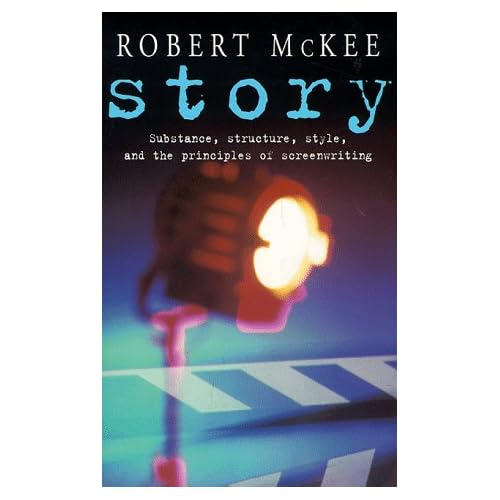
writers’ magazine about a book called STORY: SUBSTANCE, STRUCTURE, STYLE AND THE PRINCIPLES OF SCREENWRITING by Robert McKee (Methuen, 1999). It sounded interesting, so I borrowed a
copy from the library.
| This book is made of awesome |
It was a revelation. For the first time,
here were the mechanics of storytelling laid out explicitly, in diagram form, even. I
studied that book from beginning to end, writing out pages of notes, and
slowly, over the course of many more stories, began to understand what I needed
to do to make my plots work.
So, “a story has a beginning, a middle and
an end.” Fair enough. But what function do those three elements actually have? To understand them, it’s necessary
to break things down a bit. So let’s give
this a YA/kidlit twist and imagine you’re writing a story about a kid who
discovers his teachers are zombie vampires…
The
beginning: something happens to your Main Character
(who shall herein be referred to as the MC) that upsets the balance in his life - he
discovers his teachers are zombie vampires. This particular event can also be
called (a la McKee) the inciting
incident. I like to call it the spark
– as in, the event that sparks the story.
This spark propels your MC into a quest to
redress the balance in his life, sometimes known as, er, the quest. Basically, it’s their mission to
get everything back to normal (they need to find a way to get rid of the
vampires).
Only this musn’t happen… not straight away,
anyhow. You have to put obstacles in the MC’s way to stop them achieving their
mission - aka conflict. Each
obstacle must be bigger than the
last – for example, first obstacle: the MC needs to make stakes to
kill off the vampire teachers, but can’t find any wood; second obstacle: he finds wood and makes the stakes, only to discover all the legends
were a lie and vampires can’t be killed by wooden stakes. The number of
obstacles depends on the length of your story, and this quest and attempts to
overcome the obstacles in their way are what usually make up the middle of the
book.
Finally, you reach the biggest obstacle of
all - the Crisis. Your MC must take
a final action, which, if it fails, there is no return from. This kicks off the
story’s Climax, where you show the MC taking that final action - the most exciting point of the story. It
can literally be a life or death situation - either your MC has a face-off with
the head vampire, and must kill him/her to get rid of the rest of the vampires
and save everyone who hasn’t been turned into a vampire themselves. And then
you have the resolution where you
show what happens next and wrap the book up to whatever extent it needs
wrapping up (depending on whether you have a closed or open ending) – AKA the end.
Altogether, this structure is known as the Story Arc. If it was in picture form,
it might looks something like this:
![]() |
| © Emma Pass 2012 |
You don't have to nail this
structure in your first draft – I'd say that’s pretty much impossible, in fact, especially if you write the way I do and discover most of your story as you go along.
But when I reach the editing stage, understanding how a story actually works
is the key to being able to fix problems and make the story I’m
trying to tell as strong as possible. Gaining that knowledge has literally
unlocked writing for me.
What
about you? Which writing resources and advice have you found most useful, and
how did they help you?
Labels:
editing,
Robert McKee,
writing
Subscribe to:
Posts (Atom)